Oct 3, 2026Buying Guides
Custom Branded Umbrellas: Complete B2B Buying Guide
Learn how to source custom-branded umbrellas for corporate gifts, promotions and private label projects, including materials, printing, MOQ, samples and lead time.
Custom Branded Umbrellas: A Complete Buying Guide for B2B Buyers
Custom branded umbrellas are more than practical rain protection. For companies, promotional distributors, retailers, golf clubs, and corporate gift buyers, they can become highly visible branded products that are used repeatedly over a long period of time.
However, ordering custom umbrellas involves more than choosing a colour and adding a logo. Umbrella size, frame construction, canopy fabric, printing method, packaging, order quantity, and production lead time can all affect the final result.
This guide explains the main points B2B buyers should consider before requesting a quotation or placing a custom umbrella order.
1. Choose the Right Umbrella Type
The first step is deciding which umbrella style best suits your project.
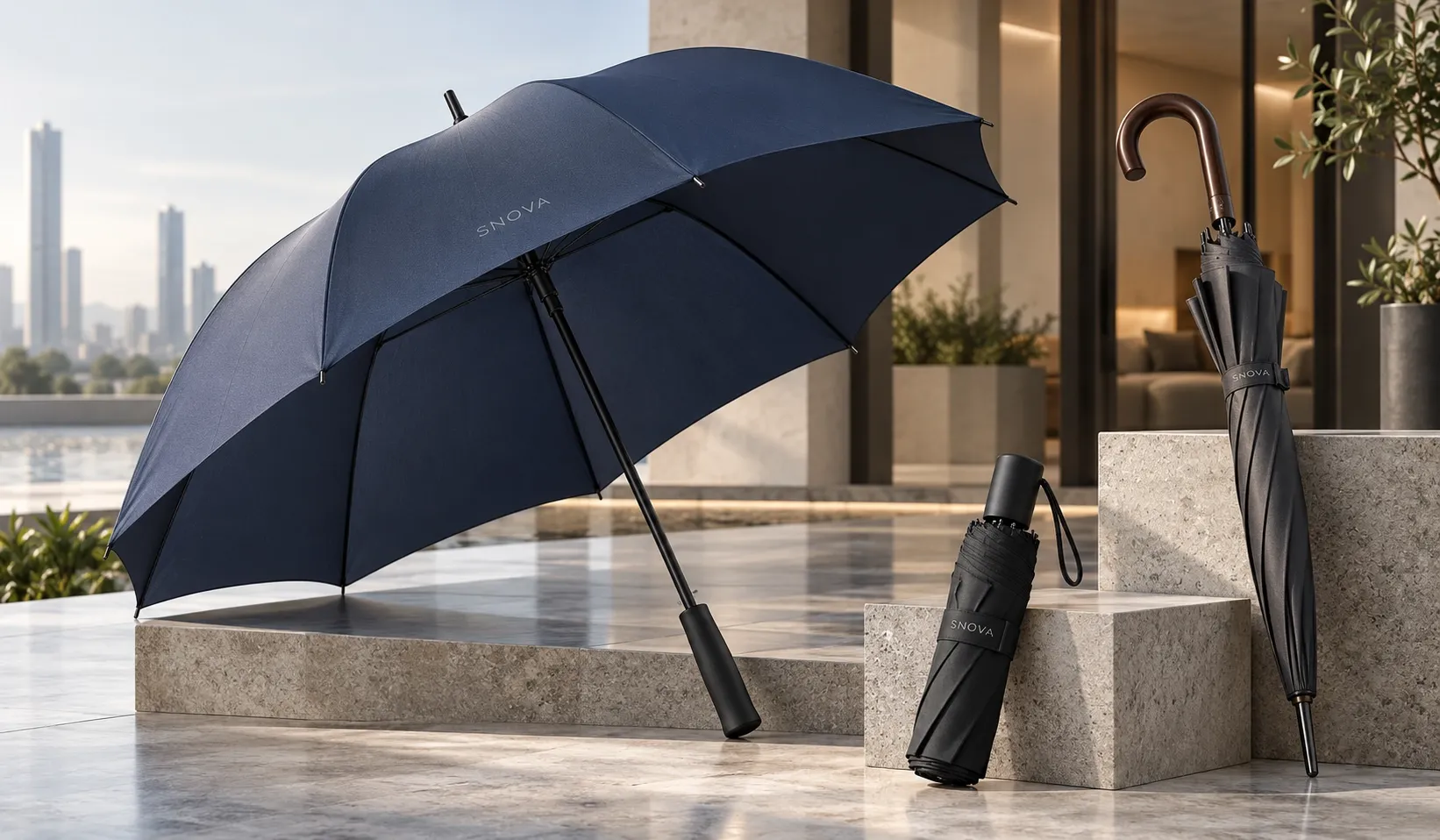
Golf Umbrellas
Golf umbrellas normally have a larger canopy and provide more coverage than standard umbrellas. They are commonly used for:
- Golf tournaments and clubs
- Automotive promotions
- Sports events
- Corporate gifts
- Outdoor brand campaigns
They also provide a large printing area, making them suitable for logos that need strong visibility.
Folding Umbrellas
Folding umbrellas are compact and easy to carry, making them a popular option for employee gifts, client gifts, travel programmes and retail collections.
Common options include manual opening, automatic opening and automatic open-close mechanisms.
Their smaller packed size can also make distribution easier when umbrellas are being shipped individually to employees, customers or event participants.
Straight Umbrellas
Straight umbrellas, sometimes called stick or walking-stick umbrellas, offer a more traditional appearance.
They are often selected by hotels, beauty brands, financial companies and premium corporate gift programmes where presentation is just as important as functionality.
Wooden hook handles, matte handles and understated branding can create a more refined look than a typical promotional umbrella.
2. Understand the Main Umbrella Specifications
Two umbrellas may look similar in a catalogue but have very different constructions.
Before comparing quotations, check specifications such as:
- Canopy diameter or umbrella size
- Shaft material
- Rib material
- Number of ribs
- Opening mechanism
- Handle material
- Canopy fabric
- Printing method
For example, fiberglass ribs are commonly used when greater flexibility and wind resistance are required, while steel ribs may offer a different balance between cost, weight, and strength.
Likewise, canopy fabric can influence appearance and performance. Pongee is widely used for custom umbrellas because of its smooth hand feel and good printing performance.
The important point is to compare products based on specifications rather than unit price alone.
3. Select the Right Branding Method
The best printing method depends on your artwork, number of colours, and desired visual effect.
Screen Printing
Screen printing is widely used for logos, text and relatively simple artwork.
It is a practical choice when a logo needs to be printed on one or several umbrella panels.
Digital Printing
Digital printing is better suited to:
- Full-colour graphics
- Gradients
- Photographic designs
- Complex illustrations
- All-over canopy artwork
A folding umbrella with full-panel digital printing, for example, can become part of the brand design itself rather than simply carrying a logo.
Buyers should provide vector artwork whenever possible, usually in AI, EPS or editable PDF format.
Pantone references are also helpful when brand colour consistency is important.
4. Decide How Much Customisation You Need
Customisation can extend well beyond canopy printing.
Depending on the project, buyers may also customise:
- Canopy colour
- Umbrella strap
- Woven label
- Fabric label
- Handle
- Sleeve
- Hangtag
- Gift box
- Retail packaging
- Barcode
- Metal badge or nameplate
This is particularly important for private-label programmes.
A promotional umbrella may only need a standard umbrella with a printed logo, while a retail or premium corporate project may require matching packaging, custom labels and specific material combinations.
Defining the required level of customisation early helps suppliers provide a more accurate quotation.
5. Ask About Samples Before Bulk Production
A sample can help confirm whether the product meets expectations before mass production begins.
There are generally several types of samples:
Existing sample:
A similar stock sample used to evaluate general construction and workmanship.
Custom sample:
A sample produced using the buyer's logo, colours, or other customised details.
Pre-production sample:
A sample made according to the confirmed order specifications before bulk production starts.
For projects where branding, colour matching or packaging is critical, sample approval can significantly reduce misunderstandings later in production.
When checking a sample, buyers should review not only appearance but also opening function, frame construction, printing position, colour accuracy, sewing, and finishing.
6. Understand MOQ, Pricing and Lead Time
Custom umbrella pricing usually depends on several factors:
- Umbrella model
- Quantity
- Frame specification
- Canopy fabric
- Printing method
- Number of printed panels
- Packaging
- Additional custom components
This is why asking only for “the price of a custom umbrella” rarely produces a meaningful comparison.
MOQ can also vary depending on the project. A standard umbrella with logo printing may require a different minimum quantity from a fully customised private-label umbrella using special fabric colours, custom handles or retail packaging.
Production lead time also depends on the level of customisation.
Buyers working toward a fixed event date or campaign launch should tell the supplier the required delivery date at the quotation stage—not after production has already started.
7. Compare Suppliers Beyond Unit Price
The lowest quotation is not always the lowest-risk option.
For branded products, buyers should also evaluate whether the supplier can provide:
- Clear product specifications
- Artwork confirmation
- Sample support
- Consistent printing
- Quality inspection
- Packaging control
- Reliable communication
- Realistic production timelines
For repeat programmes, consistency between the first order and later production runs can be especially important.
A good supplier should be able to explain why one construction, material or printing method is more suitable for a specific project rather than simply offering the cheapest available umbrella.
What Information Should You Send for a Custom Umbrella Quote?
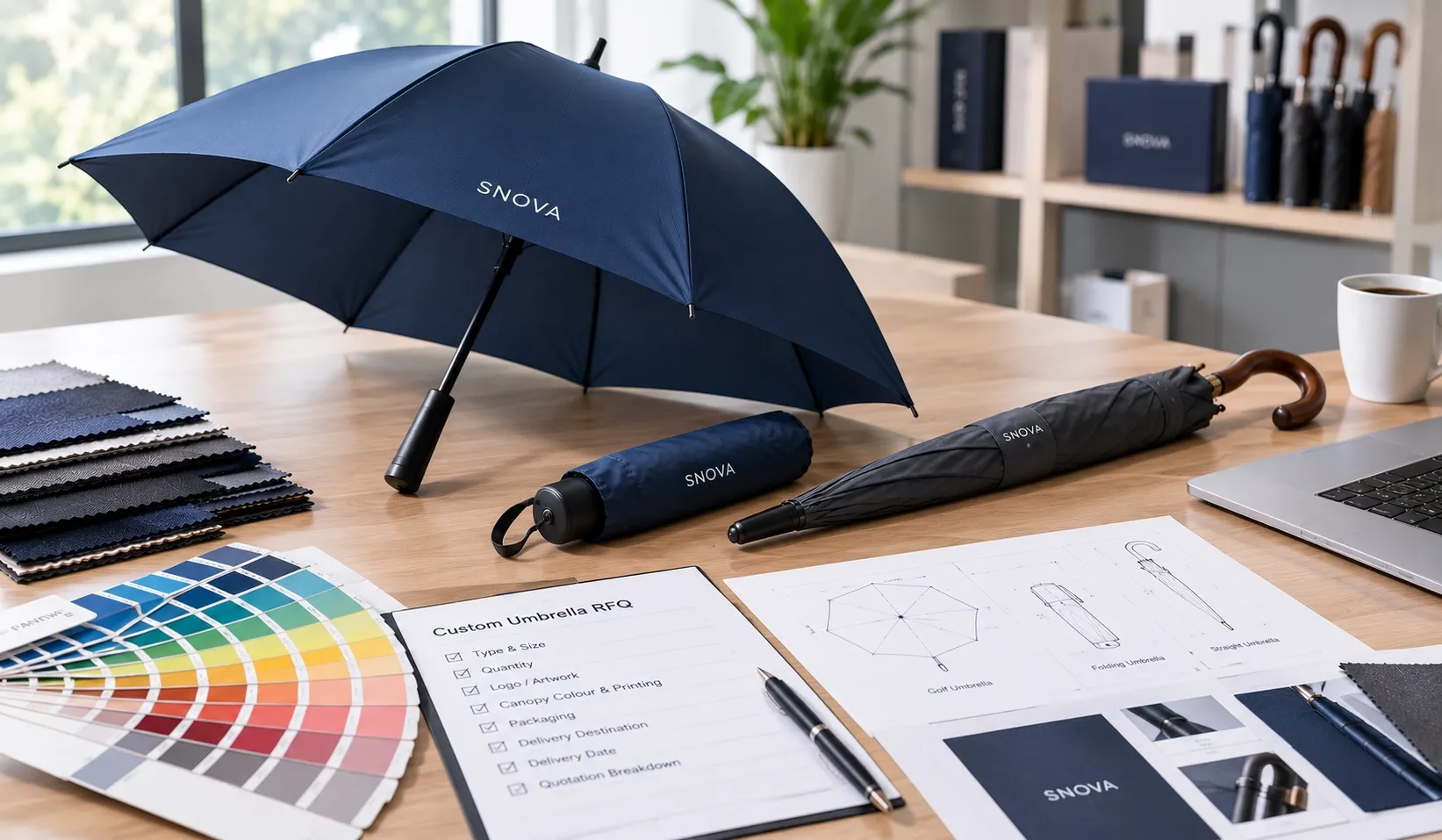
To receive a useful quotation, it helps to provide:
- Umbrella type
- Approximate quantity
- Preferred size
- Logo or artwork
- Printing positions
- Canopy colour
- Packaging requirements
- Delivery country
- Required delivery date
If some specifications are still undecided, explain the intended application and target quality level. The supplier can then recommend suitable options.
Final Thoughts
A successful custom umbrella project starts with clear specifications.
Instead of comparing umbrellas only by unit price, buyers should consider the complete product: canopy size, frame structure, materials, printing, packaging, quality control and delivery requirements.
The right combination depends on how the umbrella will be used and how the brand should be presented.
For premium corporate gifts, promotional programmes, retail collections or private-label projects, defining these requirements before production makes it easier to control both quality and cost.
If you are planning a custom umbrella project, share your preferred umbrella type, quantity, artwork, delivery destination, and required timeline. Snova Umbrellas can help evaluate suitable options for golf, folding, and straight umbrellas based on your branding and project requirements.